







- March 6, 2026
CRREM, UK NZCBS & ESOS updates
The week leading to MIPIM 2026 is turning out to be quite eventful, and not necessarily for the right reasons.
Sticking with energy and carbon related matters, here’s our top-3 updates that the industry should be aware of.
Update No.1: CRREM
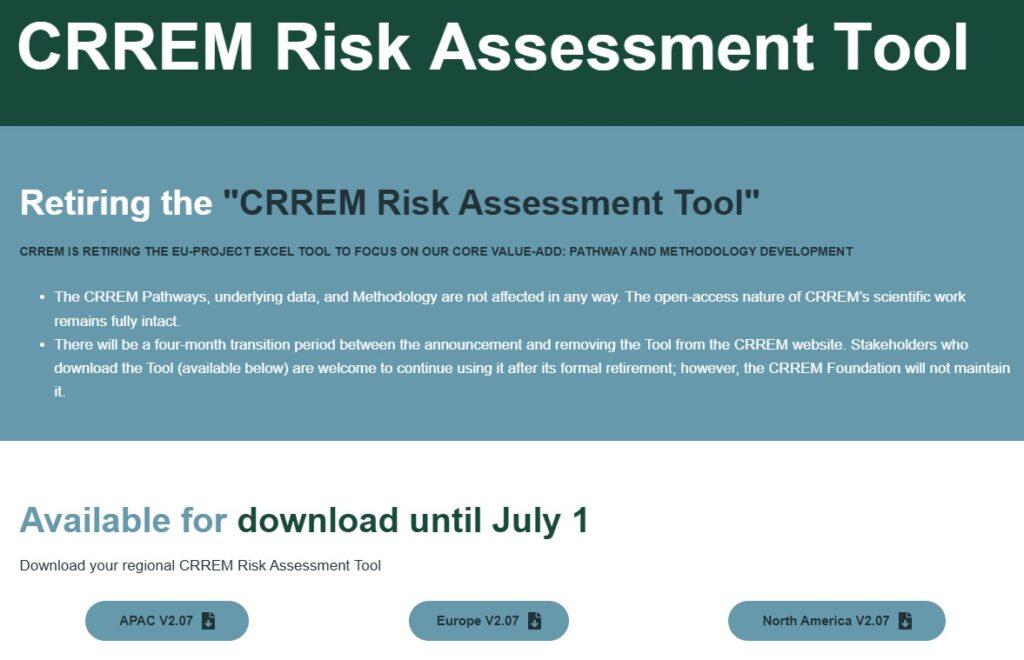
The CRREM Foundation will retire the standalone CRREM Risk Assessment Tool, the free Excel-based calculation spreadsheet available on the CRREM website, on 1st July 2026. The decision reflects the maturation of the CRREM ecosystem and a strategic refocus on CRREM’s core value-add, which is developing and maintaining the CRREM Pathways and globally consistent methods to compare buildings against them. They are extracting the Tool’s underlying components (e.g. pathways, datasets and methodology) and organising them in a fully open-access, user-friendly, CRREM Library.
Needless to say, download your regional Tools in these last four monhts that they’re available:
Update No.2: UK NZCBS
The first version of the UK Net Zero Carbon Buildings Standard is about to be finally published, most likely next week! The verification methodology is currently being developed and will be launched in Q2 2026 instead.
As first announced in our blog article in 2024, after our team had the opportunity to participate through CIBSE in the webinar focused on the pilot version (click here for more details), this launch is particularly important for our industry, and not only in the UK but globally as very few Countries have implemented yet a formal technical standard to define what “net zero carbon” really means: we have a feeling that the UK example may be followed by other nations, for example by aligning to the upfront carbon limits (e.g. 765 kg CO2e/m2 GIA for offices New BUild 2026 reducing to 395 kgCO2e/m2 GIA by 2035).
Update No.3: ESOS

The ESOS Phase 3 Notification of Compliance (NOC) and Action Plan Data Publications have now been updated to include all data submitted up to 23rd February 2026. Click here to access the NOC weblink and here for the Action Plans.
Over 85% of ESOS participants are now compliant with these requirements, with more organisations currently being brought into compliance. Organisations that have not addressed these requirements are being investigated by the compliance bodies (the Environment Agency in England and other regulators for the devolved regions and offshore waters) and enforcement action may be taken against them.
As a reminder, those organisations that have not addressed these requirements may be at risk of enforcement action and should contact the Environment Agency (EA) immediately for advice on what to do next.
The participants’ contact details within the MESOS reporting system should be reviewed regularly to ensure information remains accurate and up to date. Removing outdated contacts, such as individuals who have changed roles or left the organisation, helps protect sensitive information, prevents missed communications, and reduces the risk of unauthorised access.
Feel free to reach out to us at info@esgsolutionsltd.com if you need technical supporting with the various tasks required for your ongoing energy and carbon legislation compliance.